The Structure of The Deathbird: Artist Identity in Music
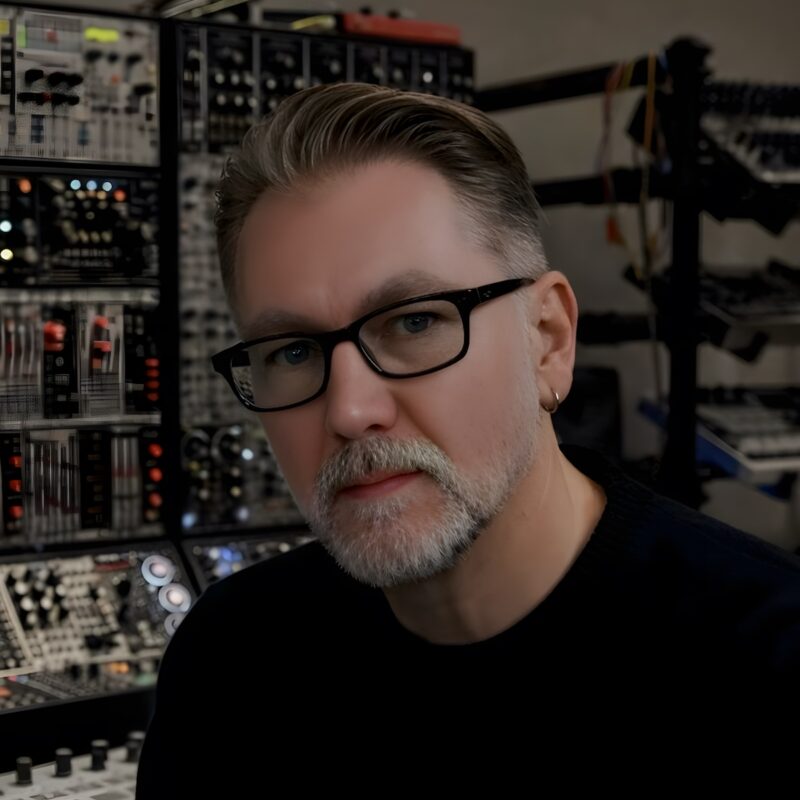
James Richmond
Friday, 20th March 2026
Over the last few weeks I’ve found myself returning to what initially appeared to be a simple and settled matter, the naming of The Deathbird as a project title. I initially batted away any idea of working under ‘James Richmond’ as I wanted an identity that would allow me to work flexibly. The more I have sat with it though, the more it has revealed itself to be something more fundamental. This isn’t about presentation or marketing, or even about naming. It is about authorship.
There was an inherent tension between the work which felt personal but also symbolic. On one hand there is a desire to claim my work as my own, to stand behind it and say, without any ambiguity, that this is mine. On the other hand, there is a pull towards creating something that exists beyond the self. Something with its own internal logic, its own sound world and imagery. In this case that world has taken shape, emerging from the work itself, this idea of The Deathbird.
There are a number of recurring themes in the songs that I am writing. Through imagery, tone, timbre, instrumentation and arrangement, themes of damage and repair, fragility held together, and the presence of something within that continues despite fracture emerge. These elements felt coherent long before I put a name to them. When the name arrived it felt not like invention but recognition.
The question then becomes how to position it. One option and the one I initially chose was to make The Deathbird the artist. This was to become the primary identity through which the work was presented. This allows the work to be contained and experienced by an audience as a complete object without reference to the people behind it. This was attractive.
The more I considered it the more I became aware of what it might obscure. As I have discussed in other writing, I’ve become very focussed on how my authorship has become diluted. Not in obvious ways but in the gradual, almost imperceptible giving up of agency through habit and deference to others, to make work more palatable, to make life easier or more agreeable. It is possible to technically own something whilst losing a sense of connection to it. This has been of fundamental concern to me over the last few months.
In this context, placing the work entirely under The Deathbird label has begun to feel like it will necessarily introduce a layer of separation. The subtle shift in emphasis has become more of a problem than I first thought. As the project identity takes centre stage, the author retreats slightly into the background. That may feel right for other projects but increasingly less so for this one.
Also, who is doing the work? For the most part, I am. Not entirely alone. I have some talented and capable collaborators who do things I cannot but otherwise the success or failure of this project falls to me.
At the same time, giving up the title that emerged from the work as a strong theme did not feel correct either. The imagery, tone and symbolism inherent in this project cannot be so easily abandoned. To give them up would be to lose something valuable and, I think, essential to the cohesion of the project. The challenge became then to find a structure where both could coexist without diminishing one another.
I have several albums worth of material in the wings. At least three.
My solution is to release this work under my own name, as James Richmond, with The Deathbird as a project marker and individual album markers denoting variation and progression within the project.
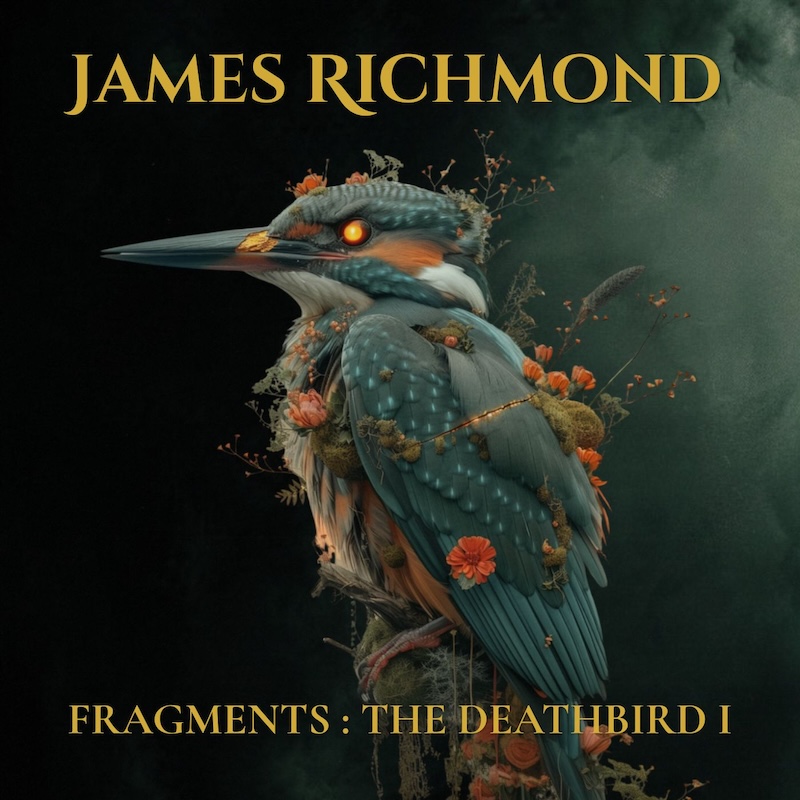
Album one will be Fragments – The Deathbird I.
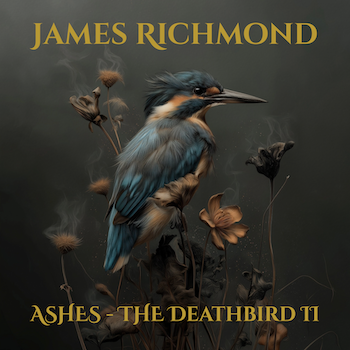
The working title for album 2 is Ashes – The Deathbird II
… and so on.
This does a number of things at once. It anchors the work clearly in authorship. There is no ambiguity about who is responsible for it, who is speaking through it. At the same time, it preserves The Deathbird as a central concept, not as an external container, but as a thread that runs through the work. It becomes a body of work rather than a mask.
By framing the releases as The Deathbird I, II, III etc, I establish what I initially sought to do by naming the project as The Deathbird. Each album stands both alone as a complete work but also as part of an unfolding process, part of a larger narrative arc that has taken me much of my adult life to document. These are stages of ongoing exploration and discovery.
Fragments as the first part of the sequence is fitting, suggesting incompleteness, fracture, a lack of resolution. This lack of resolution opens a space for what follows next. The structure is inherently flexible. By keeping my name as the artist the work remains connected to my other endeavours; writing, production work and composition all sit within the same frame. The Deathbird becomes a defined area within that, rather than something separate that needs to be explained or reconnected later.
It also feels more congruent and more honest. It doesn’t require me to choose between being present in the work or the work having its own identity. It simultaneously claims both. The work is mine, it comes from me but it is not limited to me. It is not something that I hide behind. I create it and I continue to develop it.
Ultimately the decision comes not from a desire to build a brand but instead to align the way the work is presented with the way in which it is created. Naming it in this manner becomes a part of the creative act. An extension of the work. Fragments – The Deathbird I feels like the beginning of something that has structure but is also an open world for me to explore. I have a defined framework under which I operate without knowing the precise destination that I will end up at. It feels… balanced.
What began as a question about what to call a record has become a way of thinking about how I hold authorship, identity and meaning. I landed at a place where I want them to be aligned with my musical goals, integrating an artistic philosophy that is representative of who I am at this point in my life, working within a structure that feels deliberate and alive.
Notes on the Essay: I used ChatGPT to generate chapter headings that were deleted in the final draft. Spellcheck and grammar fixes were done at the end. None of the text was AI generated.