James Richmond
Thursday, 19th March 2026
Over the last few years I have become increasingly aware of a quiet but significant shift in how I relate to my own work as a creative. It was not a dramatic realisation, but rather a gradual one: that authorship can be outsourced in ways that are subtle, socially reinforced and, at times, difficult to see from within.
By ‘outsourcing authorship’ I do not mean collaboration. Collaboration is a necessary part of my work and I value it deeply. What I mean here is a pattern in which authority over creative decisions, meaning and overall direction begins to drift away from the self and towards others. In my own practice this happened through a combination of deference, a desire for harmonious working relationships, insecurity and habit. This can lead to a situation where the work may still be technically yours, but the voice behind it no longer feels fully owned.
Part of my journey over the past few years has been noticing this pattern and feeling the need to address it, in the hope of moving towards a mode of creating that feels more internally authored. Part of the process has been literal, in that I have been finding my voice as a singer. For most of my career I assumed it wasn’t there and that I needed to work with singers. This led me to largely constrain myself to collaborations with singers or bands, working on instrumental music, whether guitar-based or electronic, whilst waiting for the right circumstances and the right people to shift into creating the music I felt I was meant to make.
For various reasons this never occurred, and despite being quite busy over the last 20+ years there was still a gnawing sense that this is not how things should be. For the last two years I’ve worked with a variety of vocal coaches and found that I do, in fact, have a voice I can use. For much of that time I approached singing from the outside in, working diligently on the craft, thinking about tone and what suits the genre. As a ‘technical’ musician, in the sense of being a collector of technique, this seemed to be the right approach.
The end result was that I could produce something competent, sometimes even convincing, but still disconnected. There was a distance between my singing voice and my sense of self, as though I was performing a version of myself rather than inhabiting it. Over time I realised that the issue was not technical, but relational. I was relating to my voice as a task, shaping it in response to external expectations rather than discovering it from within.
This has begun to change. I have become more interested in what my voice can do in its neutral, natural mode of operation, where it sits comfortably, and how I can convey emotion when I am not trying to stage manage it. This has been a paradigm shift, letting go of tension, polish and technique in the same way I have let go of the assumption that the voice was never there in the first place.
I’m not trying to be the best singer. I am being the only James Richmond. I’m sure there are other people out there with my name, what I mean is I am not in competition with other singers and I am no longer in competition with myself. Two quotes from Carl Rogers are pertinent here: ‘The curious paradox is that when I accept myself just as I am, then I can change.’ and ‘What I am is good enough if I would only be it openly.’
Much of my practice in the last six months has centred on this. Change comes not from striving to become something else, but through allowing myself to be who I already am, but have been too frightened or ashamed to reveal. This applies across the board, but in terms of my voice, my goal is no longer to improve it, but to trust it. That trust is not absolute. It fluctuates. There are still moments where I drift back to the comfort of technique and the daily practice of music for its own sake. Once a technician… I am, however, increasingly aware of my desire for control, and more able to relinquish it in favour of authenticity.
What emerges from this is qualitatively different. Less control and polish, but more connection. My voice feels closer to me, and in turn I feel closer to the music I am making. This sense of alignment was what had been missing. There is now a narrowing of the gap between intention and expression. Is the music better? Sometimes. Sometimes it is objectively less polished. It is more honest though, and that is enough.
At the same time, there has been a parallel process happening in my writing. This is where the outsourcing of authorship has been most apparent. Much of my work has been as a collaborator, focused on the mission of others and assisting in the realisation of their vision. This has been, for the most part, joyful and supportive. Shared goals, shared language and a collective sense of identity. Within that environment it was natural to adapt, to respond and to shape ideas in relation to others.
There has been nothing inherently problematic about that. In many ways it is where some of my best work has emerged. However, the sublimation of my own instincts as a writer became second nature. I would have an idea and immediately filter it through what might fit, what might be acceptable or what might align with the direction of the group. Decisions were not being made from a clear internal position, but from an inward-facing negotiation between my own voice and my perception of the external framework.
This was not always conscious. It developed gradually, often reinforced by positive feedback, but also by my natural agreeability and a desire to be what people needed in the moment. This is part of being a high-masking autistic person. We keep ourselves safe by not revealing our true selves. I’ll be whoever you need me to be in order to remain safe. This has, at times, worked too effectively, to the point of no longer knowing who I am. The difficulty with this kind of adaptation is the erosion of authorship. You are still contributing, still creating, but the origin point becomes less clear.
For the last two years I’ve been training to be a person-centred counsellor, not because a major career shift is imminent, but out of interest, for personal development and as a possible future pathway if needed.
As a result, I have found myself asking what I would choose to do if these external factors were not present. It was easier to continue working within established structures than to step outside of them and face the question of what I actually want to say.
This is where the process became difficult.
At some point it became clear that if I wanted to develop as a writer, I needed to create space for my internal voice to emerge more fully. I had been working with a fantastic band of people and was committed to the project. I was careful not to take over or disrupt what was a genuinely positive working relationship. I have the ability to take an idea through to a complete demo or even a finished release, but doing so would have gone against the collaborative nature of the band. Instead, I presented fragments of ideas that were, in my mind, already quite fully formed.
Recently I indicated that I wanted to sing one of the tracks myself, but was told there was no scope within the band for that. Although I understood the rationale, I would have been the only songwriter not permitted to sing their own material. In that moment it became clear that if I wanted to fully express myself, I would need to do so outside of that group.
I realised I needed to step away, not because the project was failing, but because it was no longer the right environment for the kind of growth I needed.
I did not want to leave. That feels important to say. I got a great deal from working with those people. This happened only a few days ago at the time of writing, and I am grieving the loss of it. But once I understood the limitations of my role within the group, I felt I had no real alternative. To continue would have meant continuing to filter my artistic voice through others. That felt like a betrayal of myself. It was not a casual decision. It was difficult, painful and necessary.
Continuing in that relationship would have meant continuing to outsource aspects of my authorship. If I wanted a clearer sense of my own voice as a writer, I needed an environment in which it was not shaped by external constraints.
I was still conflicted. It was a strong working relationship, but only as long as I operated within its limits. My mode of operation had changed. Rather than asking what was right or wrong, I began to ask what felt more congruent. I was not rejecting the group, but moving towards a structure that allowed my voice to emerge more fully.
This process is ongoing. Finding a voice does not happen overnight. It involves uncertainty, exposure and responsibility. Without familiar structures, there is nowhere to hide. The work must align with who I am.
There is also a deeper sense of ownership. The day after leaving, I found myself singing along to my own demos in the shower. Not technically, not as an exercise, but fully. I was connected to my own music in a way I had never been before.
I wept. Not out of sadness, but because something that had been missing for decades had finally connected. It was overwhelming. It told me that, despite the pain, I had made the right decision.
That impulse to outsource authorship still arises. It appears in small ways, second guessing decisions or imagining how something will be received before it exists. The difference now is that I can see it, and choose whether to follow it.
I also think about the role of technology in this. AI, in particular, offers the ability to generate ideas and structures that can displace authorship. My position is to use it as scaffolding, not as content.
Across all of this, the same pattern emerges. Finding my voice as a singer requires trusting what comes through. Finding my voice as a writer requires making decisions from within. Both involve moving from safety into uncertainty.
This does not mean rejecting collaboration or feedback, but they are no longer the starting point. Looking back, that period of outsourced authorship was not without value. I developed skills, worked with others and created work I am proud of. It was part of the process of becoming. But I reached a point where it began to limit further growth.
I genuinely hope the project I stepped away from continues to grow and prosper. Leaving was not rejection, but divergence. My contribution remains meaningful to me, and I hope the space created allows others to continue doing their best work. Growth can happen in parallel directions.
One advantage of this shift is that I have a large body of unfinished work, what I refer to as ‘the vault’. Some of it dates back to the mid 90’s. Much of it was created in the spaces between collaborations, waiting for the singer who never came.
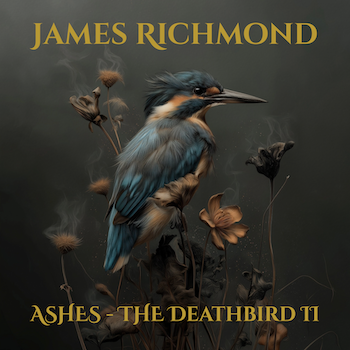
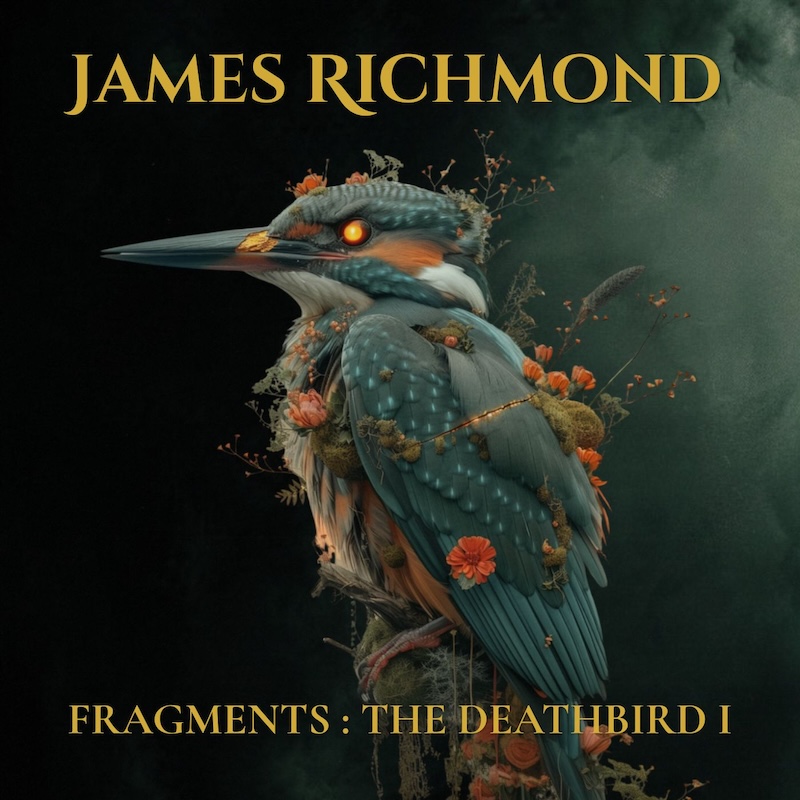
Now, I have 22 songs in development and many more in fragments. I play multiple instruments, can arrange and can collaborate where needed. I have already begun reaching out to people, and the response has been generous and encouraging. The Deathbird is no longer a side project.
Alongside that, I continue with Euclidean Circuits, and a third strand of more experimental work using generative and algorithmic processes. I have not yet decided how that will be presented.
To conclude, authorship is not merely who creates the work, but where authority for that work resides.
Reclaiming authorship is less about control and more about connection. It is about ensuring the work emerges from a place that is congruent with the creator. There is still uncertainty, but there is also clarity. The voice I am finding may not fit expectations, but it increasingly feels like my own.
Notes on the Essay: I used ChatGPT to generate chapter headings that were deleted in the final draft. Spellcheck and grammar fixes were done at the end. None of the text was AI generated.